
Reptile
Blue Tongue Lizard Care Guide

Mar
summary
Blue-tongued lizards are the largest of all the skinks and are native to Australia. They can grow up to 60 cm long and their colouring varies down their back. Their name comes from their most unique distinguishing feature – their blue tongue.
There are six species of blue-tongues in Australia. The most common types are:
The Eastern Blue-tongue (Tiliqua scincoides): This species is found throughout south-eastern Australia. Their colouring is grey with dark brown stripes across its back and tail.
The Northern Blue-tongue (Tiliqua scincoides intermedia): This species is found through Australia’s tropical regions. They have an orange/yellow colouring with darker stripes along their backs.
Blotched Blue-tongue (Tiliqua nigrolutea): This species is usually found from the highlands of south-west NSW; through Victoria and in Tasmania. Their colouring is dark brown with light coloured blotches on its back.
The Shingleback (Tiliqua rugosa): This species is found west of the dividing range. They are dark brown in colour with larger rough scales. They can also be called the Pinecone Lizard
As they have stumpy little legs, they cannot rely on quickly running away from predators. Blue-tongues will use their bright blue tongues as a defensive mechanism, and make loud hissing sounds as they rear up in anger to chase off threats. They also have a very powerful bite and habit of not letting go.
how long do they live for?
Reptiles themselves can be a large commitment with their care, and with just how long they can live. The average lifespan of a blue-tongue skink is 15 – 20 years.
how large do they grow?
The average length of an adult blue tongue skink is 60cm.
enclosure requirements
Blue Tongues are known to be active during the day, often basking and foraging for food. They are solitary animals, meaning they should be housed separately to prevent dominance and aggression.
For one adult blue tongue, we follow the recommendation of a minimum enclosure size of 1200mm x 450mm x 600mm. Ensure there is plenty of ventilation and a secure, lockable door.
The enclosure can be furnished to re-create the animals natural environment including the use of a background, a low basking log or rock, water bowl and feeding dish. An absorbent substrate is also important such as coconut fibre, or blue tongue burrow, all commonly sold at Nick’s Pet Needs.
find your lizard enclosure at nick's

Glass Reptile Terrariums
Reptile One RTF 1200HT Glass Hinged Door Terrarium 120 x 45 x 60cm
Reptile One’s RTF Terrariums provides maximum functionality for terrestrial and arboreal reptiles. Shipping = Local Pick Up Only

Glass Reptile Terrariums
Reptile One RTF 960HT Glass Hinged Door Terrarium 90 x 60 x 60cm
Reptile One’s RTF Terrariums provides maximum functionality for terrestrial and arboreal reptiles. Shipping = In Store Only

Glass Reptile Terrariums
Reptile One RTF 900HL Glass Hinged Door Terrarium 90 x 45 x 30cm
Reptile One’s RTF Terrariums provides maximum functionality for terrestrial and arboreal reptiles. Shipping = Local Pick Up Only
heating requirements
Just like any other reptile, the blue tongue lizard is ectothermic (they cannot regulate their own body temperature). Since we are keeping them in captivity, it is our responsibility to make sure we offer an accurate temperature gradient so they can self regulate by moving to different areas of the enclosure based.
You will need to have one half of the enclosure as the warmer basking zone, and the other as the cooling end.

Providing adequate temperature gradients (either horizontally or vertically) within a blue tongue’s enclosure is essential for their health. They require a basking spot maintained between 33-35˚C and a cool end of 24-26˚C during the day, with night time temperatures staying above 18˚C. We recommended checking temperatures daily, and having any heat source regulated with a good quality thermostat.
Recommended sources of heat include the use of incandescent, halogen or ceramic globes all sold at Nick’s Pet Needs.
Temperatures should be checked daily and must be regulated with the use of a good quality thermostat.
lighting requirements
Ultraviolet light (UV) is imperative in a blue tongue’s growth and development. A 5.0 UVB tube or compact globe must be provided 10-12 hours daily, along with access to unfiltered, natural light at least twice a week. Blue Tongue’s require a ‘day and night’ cycle with lights running for approximately 10-12 hours each day, set on a timer. You can pick one up from your local Bunnings.
daily maintanence
Daily ‘spot checks’ should be completed daily along side fresh water changes. Any faeces, shed skin or uneaten food should be removed immediately. A full substrate change should be carried out every 6-8 weeks (depending on what substrate is used) and the enclosure thoroughly cleaned with a reptile-safe disinfectant such as F10 (Sold here at Nick’s Pet Needs).
food and diet requirements
Blue Tongues are omnivores, so they feed on a range of live insects and plants.
In captivity, a variety should be offered as a 50:50 ratio of live insects to fresh fruits and vegetables. Live foods include crickets, woodies, mealworms (in moderation) and silkworms. Note that the crickets and woodies may be a little quick so hand feeding can be great for bonding. Ensure to dust your live food with calcium and multivitamin powder prior to feeding.
Blue Tongues can also be fed small amounts of beef or chicken dog food, you can mix in calcium powder and a boiled egg for additional nutrients. Fruits and vegetables can include apple, pear, melons, berries, banana, carrot and kale.
Pellets and omnivore toppings are available to add to your blue tongue’s feed dish.
A juvenile blue tongue should be fed daily, and adults every second day.
When it comes to water for your blue tongue lizard, it’s important to keep on top of the maintenance to avoid accumulating bacteria.
The water should be replaced daily with the bowl scrubbed weekly.
The placement of your bowl is recommended to be on the cooler side of the enclosure to avoid evaporating too quickly.

HabiStat Sandstone Feeding Dish is a flat food bowl which fits neatly in any setup. Shipping = Medium 1 Shot

Reptile Bowls
HabiStat Sandstone Feeding Dish is a flat food bowl which fits neatly in any setup. Shipping = Small1 Shot

Reptile Bowls
HabiStat Sandstone Feeding Dish is a flat food bowl which fits neatly in any setup. Shipping = Small

HabiStat Sandstone Feeding Dish is a flat food bowl which fits neatly in any setup. Shipping = Small

HabiStat Sandstone Feeding Dish is a flat food bowl which fits neatly in any setup. Shipping = Small 1 Shot
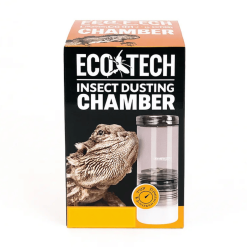
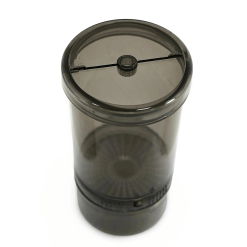
Designed for convenience, this innovative tool allows you to coat feeder insects such as crickets, wood roaches, and mealworms with calcium or multivitamin powder quickly and evenly — without the mess. Shipping = Small

Reptile Bowls
This water bowl will not only add a touch of realism to your reptile’s enclosure but it is also designed with low sides making it easier for small or short legged reptiles to enter and exit safely. Shipping = Small 1 Shot
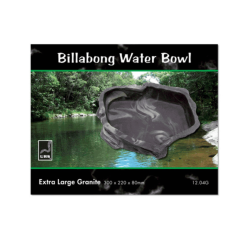

Made from high-quality poly resin, it provides durability and ease of cleaning while blending naturally with the surroundings. Shipping = Large 1 Shot
This product has multiple variants. The options may be chosen on the product pagehandling and socialising your new reptile tips
When you first bring your blue tongue home, it’s normal for them to be quite shy and flighty. You’re new, their enclosure home is new and their routine may be new.
We follow the recommendation of letting them settle for a week before handling.
Simply provide their food and water daily then leave them be.

potential health concerns
It’s imperative to learn the common signs and symptoms of a blue tongue lizard that is ill, so that if you ever see them you can respond quickly.
Intestional Parasites (Worms):
Blue tongues are susceptible to worms through their food. Faecal checks and worming can be done through your veterinarian.
Dysecdysis (Adnormal Shedding): Low humidity can cause incomplete shedding.
Metabolic Bone Disease (MBD): Calcium or vitamin D3 Deficiency caused by incorrect diet or lack of adequate UV lighting.

Mites:
Adult mites can live up to 40 days, and lay up to 20 eggs at a time.
In the captive environment, infestations spread easily between enclosures and the parasite can be very difficult to eradicate from collections of animals.
Once you have identified a positive infestation of mites, both the blue tongue and their enclosure must be effectively treated for eradication of the parasite. Temperatures above 50 C and humidity below 50% will kill mite stages. Mites can be easily drowned, however eggs may survive submersion.
The most effective combination of treatments includes:
• Isolation and treatment of affected reptiles in a simple environment (repeat treatment may be required to break the mite life cycle).
• Cleaning and treatment of environment including all enclosure furnishings and substrates, and the environment outside the enclosure. This can be difficult if you have a bioactive enclosure – all substrates will need to be discarded and replaced.
Prevention is always the best treatment, we have a mite insecticide spray available to assist with the prevention of mites.

Respiratory Infection
Like many reptiles, snakes are subject to respiratory infections. These are commonly caused by environments that are too humid causing bacteria blooms.
Should you notice some of the following symptoms, it’s important to book in with your exotic vet to start a course of antibiotics:
– Excess mucus in their mouth
– Nasal discharge
– Lethargy
– Loss of appetite
– Wheezing or ‘gurgling’ sounds
– Swollen throat
As mentioned above, prevention is always the best treatment. Keep their enclosure clean, provide lots of ventilation and ensure to monitor their humidity. Blue Tongue Lizards like humidity around the 50 – 60%.
follow our socials
share with a friend who has reptiles
Monday
Tuesday
Wednesday
Thursday
Friday
Saturday
Sunday
Public Holidays
8 – 6:00
8 – 6:00
8 – 6:00
8 – 6:00
8 – 6:00
9 – 5:00
9 – 5:00
10 – 3:00
Closed Christmas Day and ANZAC Day
Nick’s Pet Needs is a Pet Shop and Aquarium located Near Ebbw Vale
1/15 Mining St, Bundamba, QLD
We are across the road from Bunnings Warehouse and two doors down from the Little Critters Vet.
You can park your car in our dedicated carpark directly in front of the store.
We are also very close to the Bundamba Railway Station!

